Breast uplift surgery or mastopexy aims to lift the breast volume higher on the chest without significantly reducing the size of the breasts. In this type of breast surgery, your breasts are reshaped and lifted without the use of implants.
The operation is performed under a general anaesthetic and usually takes around two hours. During the breast uplift surgery incisions are made around the areola (the dark area around the nipple), a vertical cut underneath the areola and underneath the breast in the crease where the breast meets the chest. Excess skin is then removed and breast tissue is reshaped. The nipple will also be lifted so it is in a higher position, resulting in perkier, firmer breasts.
Graham Offer has spent many years working on breast uplift surgery techniques to give a very natural-looking, lifted result. He published his technique in 2013 in the peer-reviewed scientific journal Aesthetic Surgery. The data and technique were also presented at the BAAPS conference in London prior to this. Furthermore, Graham gave a guest lecture on his breast uplift surgery technique at the 50th Anniversary of the Indian Society of Plastic Surgeons (APSICON) in India in 2015. He was one of their International expert guests and taught a masterclass. Graham Offer can provide his utmost expertise to help you make an informed decision about your breast uplift surgery.
You can see the significant amount of lift achieved and the improvement in the shape of the bust following this mastopexy surgery.
Patient 2
With large areola, these are reduced during the mastopexy surgery in order for the new size to better match, and be more aesthetic on the breast. Here you can see this along with the uplift achieved. With slightly darker skin there is more risk of the scars becoming pigmented but this often settles down with time, although may remain with some pigmentation.
Patient 3
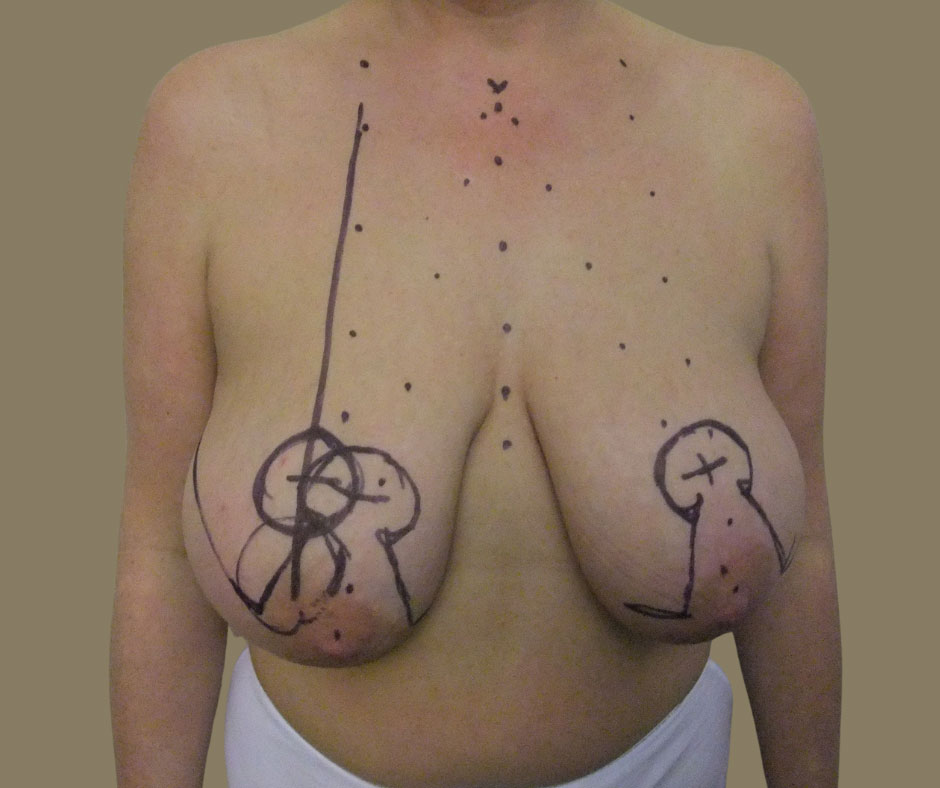
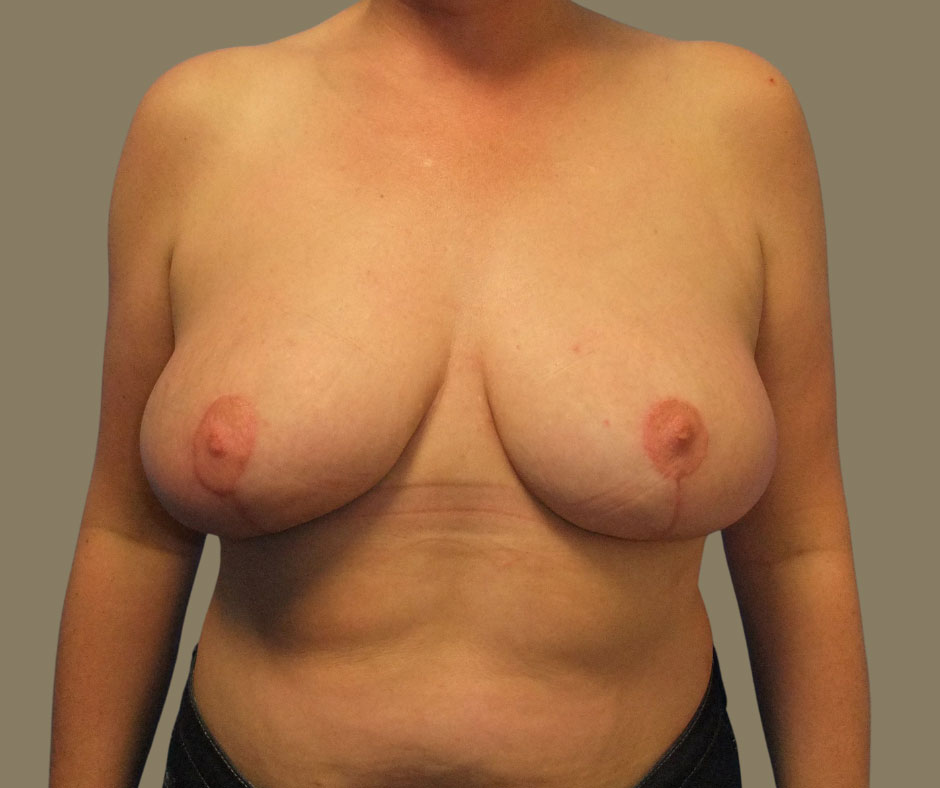
Bilateral Mastopexy. Preop showing severe breast ptosis (sagging). Nipples 31cm and 29 cm respectively from the sternal notch and they now lie below the elbow crease .Postoperatively at 6 months. Scars have settled extremely well and the breasts have been lifted well above the elbows onto the chest. This patient was onw of the cases in my academic paper on the subject. The lift was maintained at three years.
Patient 4
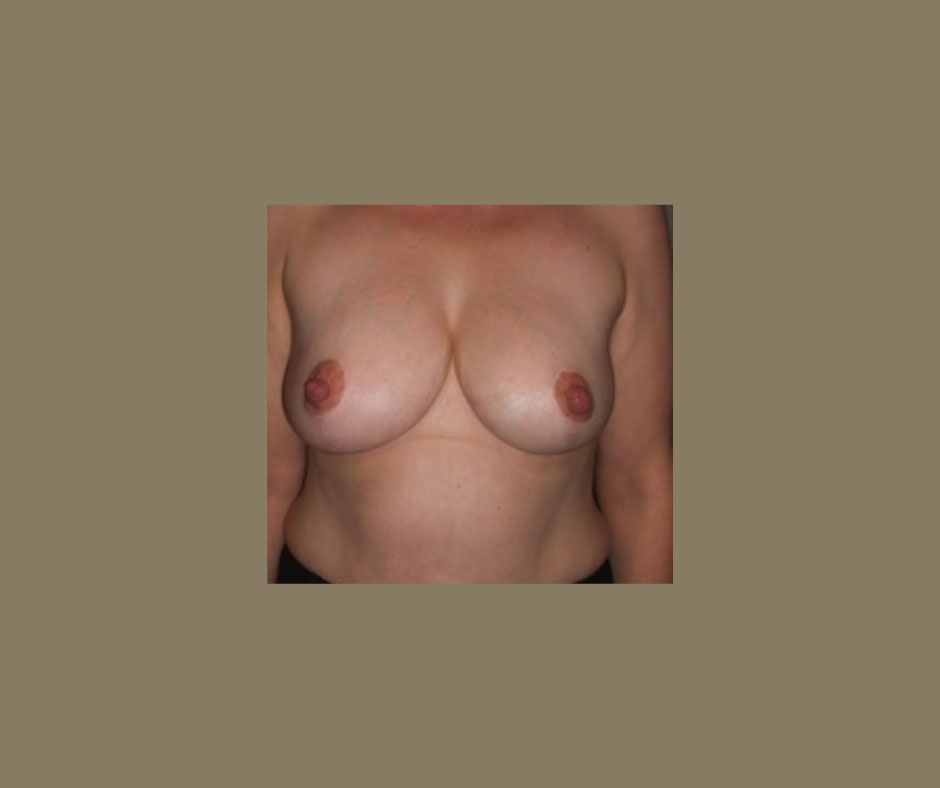
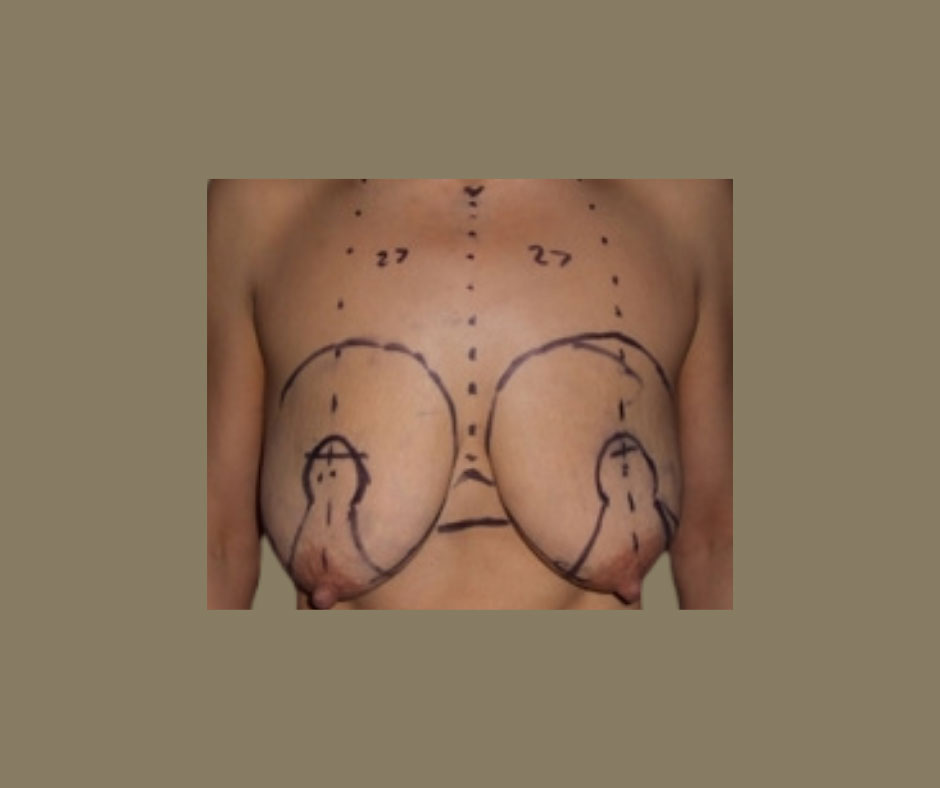
Bilateral stacked flap Mastopexy. Nipples 27cm from sternal notch. Initial result a few months after surgery. Scars still settling.
Patient 5
This lady had lost a lot of weight. She wanted lifted breasts, not reduced breasts. Graham lifted the breasts and they now lie above the elbow position. Look carefully at the right breast, before, it was below the elbow.
Patient 6
There is a limit to how much the breasts can be lifted on the chest wall. This is due partly to where the breast attaches to the ribcage. If the inframammary fold (the attachment of the breast to the chest underneath the breast) is very low, then the breasts cannot be lifted as high as one might like. This case illustrates the problem. Any attempt to move the breasts higher than this, is likely to end up with the nipples too high on the breast, and a poor long term result. The patient was still delighted with the outcome. The breasts are a better shape and are now sat at the lower chest rather than on the tummy. In a bra, the breast look fine and the loose skin in the cleavage area has been corrected.
Patient 7
Bilateral stacked flap Mastopexy. Again severe breast ptosis (sagging). Nipples 27cm from sternal notch. Again, this is all with the breast tissue, no implants have been used.
Patient 8
Mastopexy with stacked flap technique. Press pictures for front view. As with all the cases on this page: No implants have been used. The results are just from redistributing the breast tissue.
Patient 9
This lady wanted lifted more pert breasts again and wanted to avoid breast implants. Again this is a stacked flap mastopexy.
Patient 10
Stacked flap mastopexy in a patient with pigmented skin. The scars have settled quite well. They have become a little pigmented especially on the vertical scar at the front of the breast.
Patient 11
This stacked flap mastopexy produced a significant lift and I acheived a much improved shape each side. The pictures are at 5 months and the scars are not white as yet. They usually go white by 6 to 12 months.
Video of Breast Uplift Surgery
Patient Reviews
Patient RS
Body Lift
I lost 10 stone through sheer
determination and wasn’t going to let
excess skin get in the way
Patient VF
Upper Eyelid Blepharoplasty
Every time I look in the mirror, I am reminded it was one of the best decisions. It made such a difference to my face and the fact that the procedure could be performed by local anaesthetic was an added bonus
Patient SS
Abdominoplasty
Just to say that I was very pleased with the pre and post operative treatment and support from you and your team, and I am delighted with the results. This has made such a difference to how I feel about myself
Patient PF
Closed Rhinoplasty Surgery
Mr Offer went through my procedure many times so I fully understood what was going to happen. My Offer shaped my nose to how I wanted and I am so happy with the end result. Thank you Mr Offer for making me feel better within myself and giving me more confidence
Patient KW
Abdominoplasty
I would like to say how grateful I am for all you have done for me and what a wonderful person you are. From the very first meeting we had, I knew you were the right person for the job to put things back into place and to give me back my confidence I longed for. The way you handled every stage was perfect to give me the courage to go through with it
Patient AT
Breast Augmentation
Words cannot describe what you have done for me and my self-confidence. You are a truly special person who is so genuine and caring and I will never forget
Patient DB
Breast Augmentation & Reshaping & Mastopexy
Thank you are two very inadequate little words to express my gratitude and admiration for your skill, your ultimate professionalism and your warmth and empathy for your patients. I am very lucky to have been in such safe hands!
Patient CA
Fleur-de-lys abdominoplasty
I feel like I have been given a new lease of life. The care and understanding and workmanship you have showed was above any expectations I had. The results are more than I could have hoped and dreamed of
Patient LS
Bilateral Mastopexy & Abdominoplasty
Thank you so very, very much for what you have done for me. You have been professional, respectful and charming, I can’t put into words how the operation has changed my life. I now feel that I have regained my self-respect, self-worth and feel attractive again